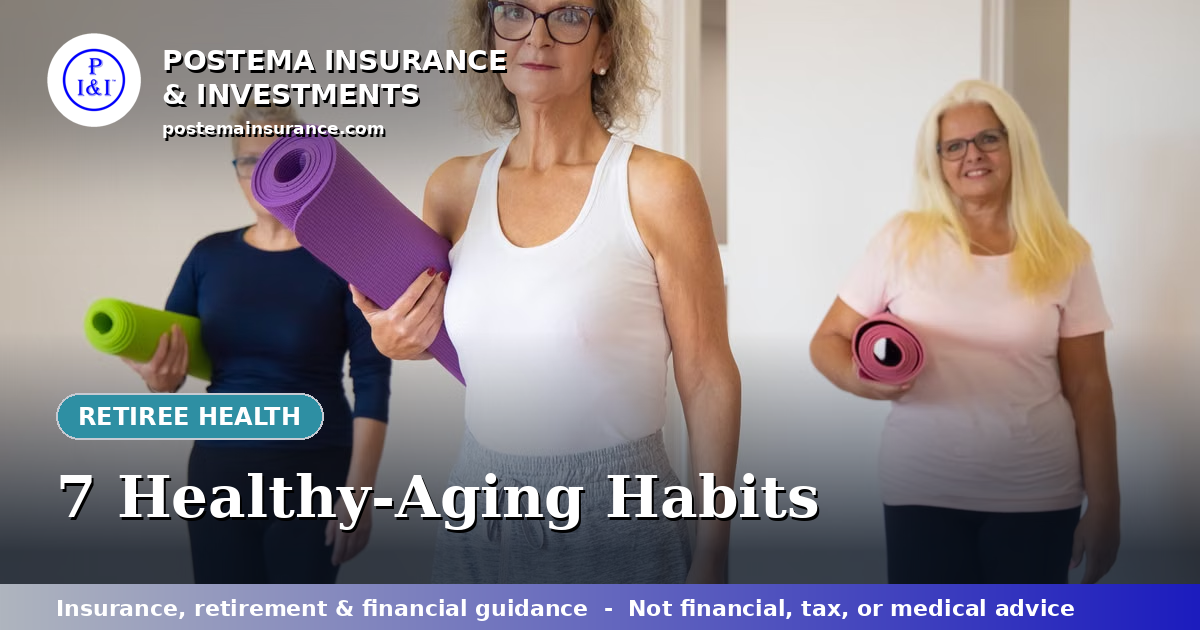
Healthy aging tips for seniors, backed by 2026 research: seven habits — movement, meals, sleep, connection, and curiosity — you can start this week.
September is Healthy Aging Month, an observance that began back in 1992. This year's theme is a fun one: "Curiosity Has No Age Limit." It is a good excuse to ask a simple question. Which habits actually help us age well?
The most reliable healthy aging tips for seniors are not flashy. The 2026 U.S. News Healthy Aging Survey found that consistent physical activity and a balanced, anti-inflammatory diet are the habits most strongly supported by evidence for a longer life. They beat trendy biohacks and supplements.
Below are seven habits drawn from that research and from guidance backed by the National Institute on Aging (NIA). Each comes with one small step you can take this week. This article is educational, not medical advice. Please talk with your doctor before changing your routine.
•1. Move most days
•2. Eat a balanced, anti-inflammatory diet
•3. Protect your sleep
•4. Stay socially connected
•5. Tend your mental health
•6. Keep up with preventive care
•7. Stay curious
Habits 1–3: move, eat, and sleep like it matters
Movement tops nearly every list, and 2026 research is no exception. The U.S. News survey put consistent physical activity at the head of the evidence, ahead of any supplement. Start this week: take a 10-minute walk after one meal a day, then build from there.
Food comes next. The same survey highlighted a balanced, anti-inflammatory way of eating — think regular meals built around whole foods rather than quick fixes. Start this week: add one extra serving of vegetables to dinner, and notice how easy it becomes a routine.
Sleep is the quiet third leg. The NIA includes adequate sleep among its core habits for aging well. Start this week: set a consistent bedtime and keep screens out of the last half hour of your evening.
Habits 4–5: healthy aging tips for seniors are social, too
Connection is not a luxury. In 2026 reporting on healthy aging, researchers describe social connection as a biological necessity tied to longevity. Yet 41% of Americans say they feel lonely at least sometimes. Start this week: schedule one standing phone call, coffee, or card game with someone you enjoy.
Mental health belongs on the same list. The NIA pairs attention to mental health with social connection as pillars of healthy aging. Mood, memory, and motivation feed each other. Start this week: if worry or low mood has lingered for more than a few weeks, mention it at your next doctor visit. It is a health topic like any other.
Habits 6–7: prevention and curiosity
Preventive care is the habit that catches problems while they are small. The NIA lists regular preventive healthcare among its endorsed habits — checkups, screenings, and vaccinations on the schedule your doctor recommends. Start this week: look at your calendar and book any visit you have been putting off.
Then there is this year's theme: curiosity. Research indexed by the National Library of Medicine found that older adults with higher curiosity had greater five-year survival rates than their less-curious peers. Curiosity is linked to longevity in that research — an association, not proof of cause and effect — but it costs nothing to try. Start this week: pick one thing you have always wondered about and spend 20 minutes exploring it. A language, a recipe, a family history question. Anything counts.
Why this September is a good moment
Aging well is not a niche topic anymore. Workers 55 and older now make up 23.2% of the U.S. workforce, according to the Bureau of Labor Statistics. And by 2034, adults 65 and older are projected to outnumber children under 18 in the United States for the first time, per Census projections. More of life is being lived after 65 — which makes these habits a better investment than ever.
Notice what is not on the list: expensive gadgets, miracle powders, extreme routines. The 2026 evidence favors steady, ordinary habits done consistently.
What this means for you
You do not need to adopt all seven habits at once. Pick the one that feels easiest and start there. Small, repeated actions — a daily walk, one more vegetable, one standing coffee date — are the pattern the research keeps rewarding. And loop in your doctor. They can help you match these habits to your health conditions and medications.
This article is for educational and informational purposes only and does not constitute financial, insurance, tax, medical, or legal advice. It is published by Postema Insurance & Investments, and its articles may describe products and services available through its licensed professionals. We are not affiliated with or endorsed by any government agency or the federal Medicare program. Insurance and annuity guarantees are subject to the claims-paying ability of the issuing company. Rates and figures reflect publicly available information as of the publication date, are averages rather than individual quotes, and may change. Consult a licensed professional about your individual situation before making any decision.
Have questions about this topic?
Healthy habits protect your body — a solid plan protects your finances. Postema Insurance & Investments offers no-obligation reviews of your retirement income, insurance, and long-term care picture. Reach out today, and let's make sure your plan ages as well as you do.